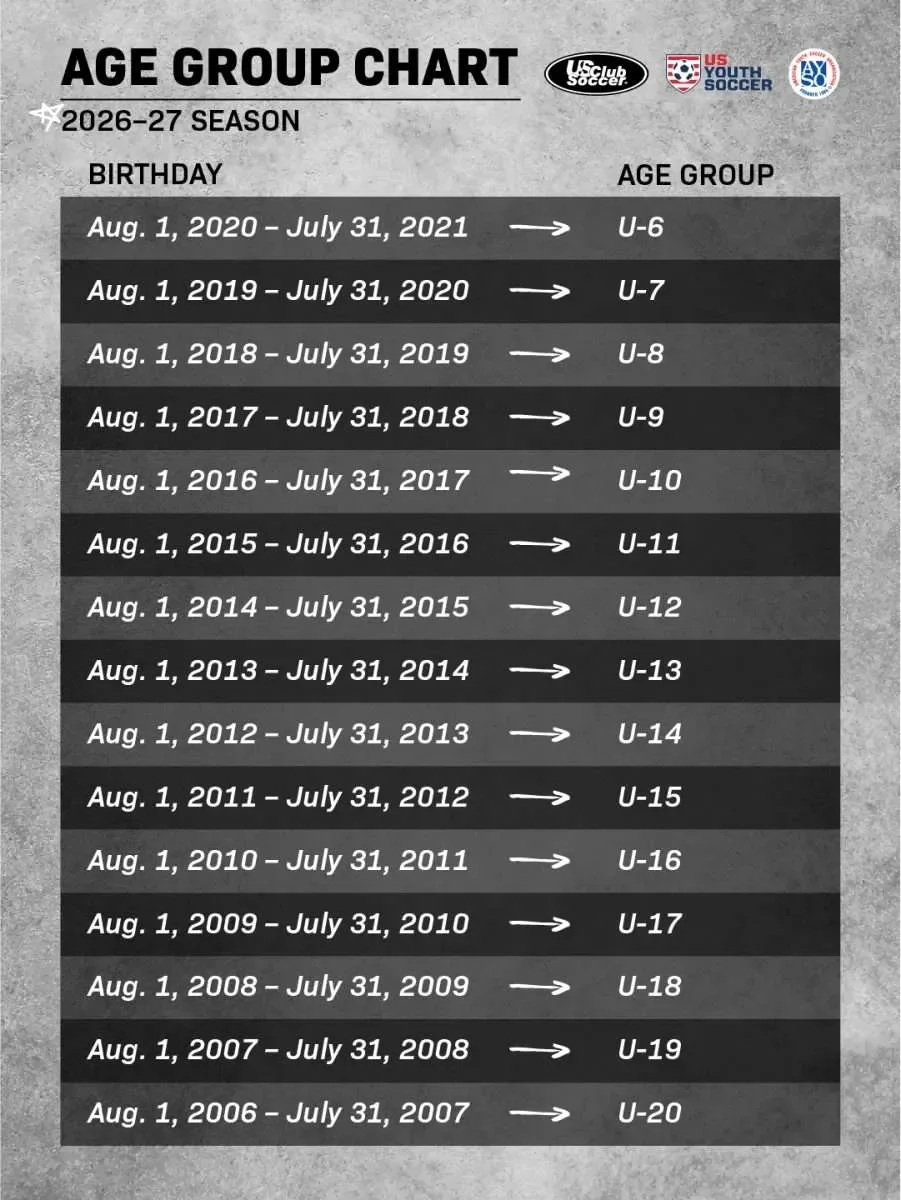
Starting with the 2026–27 season, U.S. youth soccer organizations will implement changes to age group formation in an effort to better align teams with school grades and peer groups. We know families may have questions, so here are a few key points to help explain what’s changing and what it may mean for players:
Age group formation is changing starting with the 2026–27 season. Youth soccer organizations including US Club Soccer, US Youth Soccer, and AYSO will move from a calendar-year cutoff (Jan. 1–Dec. 31) to a school-year style cutoff (Aug. 1–July 31).
The goal is to keep more players with classmates and friends. The new system better aligns soccer teams with school grades, helping players stay with peers they see in school and reducing disruptions as they get older.
Some players may change age groups. In general, players born August–December may move to a younger soccer age group, while players born January–July often remain with the same peer group. Families should expect some roster changes ahead of the 2026–27 season.
This change is intended to reduce “trapped players.” These are players separated from most of their teammates during middle school or high school because of birth-year age rules, often leading to fewer playing opportunities. The new cutoff is designed to minimize that issue.
Nothing changes for the 2025–26 season. Current teams and registrations will continue under the existing birth-year model. The transition begins with tryouts and team formation for the 2026–27 season.
What does this mean for current players?
Some players may remain in the same age group for an additional season (for example, staying at U12 after already spending two years there). This does not necessarily mean they’ll suddenly be competing against much younger players. The purpose of the change is to better align teams with school grades and peer groups, meaning many players will continue playing with classmates and familiar teammates. Our focus will remain placing players in environments that support both development and appropriate competition.